
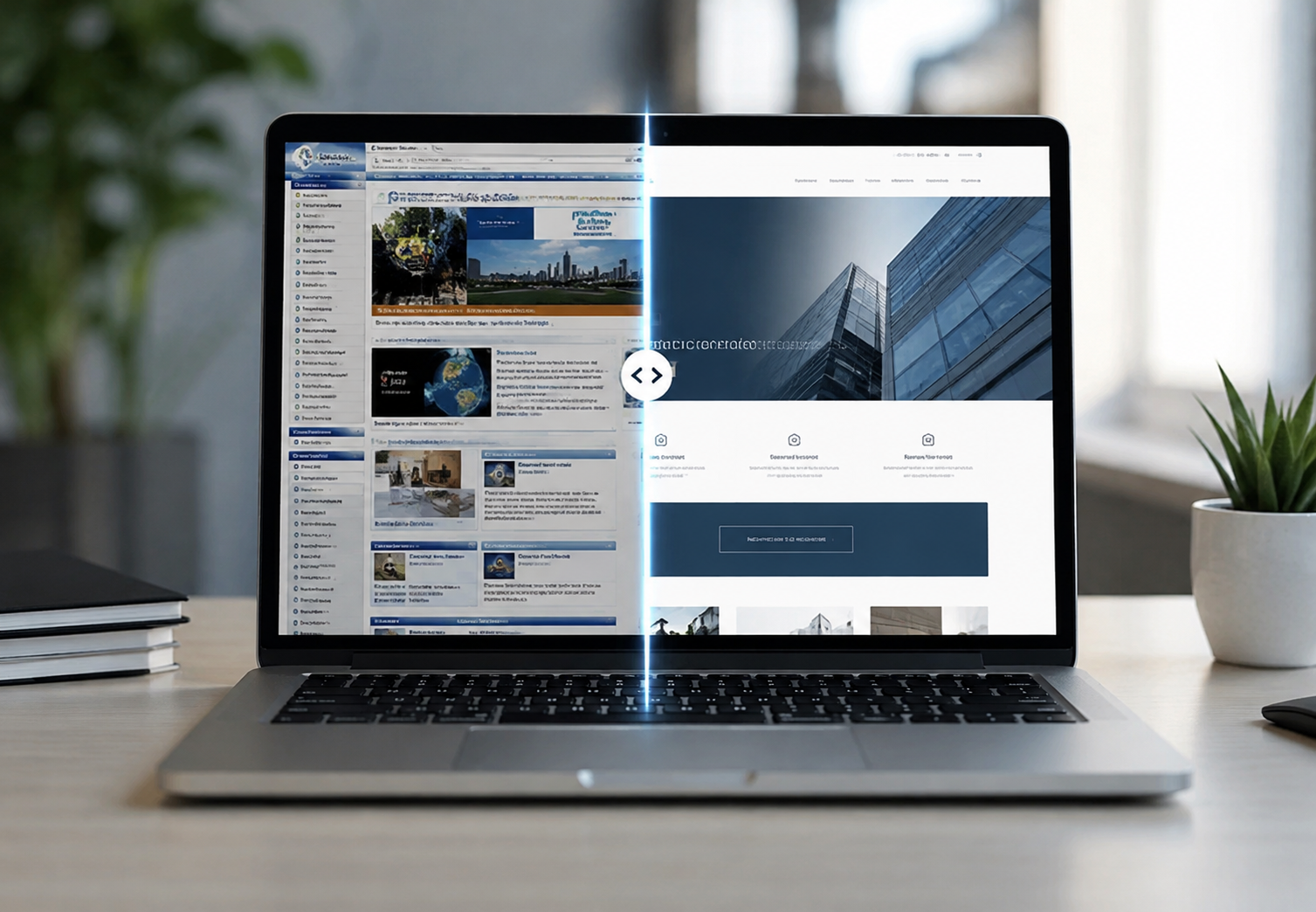
10 Signs Your Business Website Needs A Redesign
Your website is often the first place potential customers interact with your business. If it looks outdated, loads slowly or makes it difficult for visitors to find information, it may be working against your goals. A redesign is not simply about changing colours or adding modern visuals. It can address usability, mobile performance, accessibility, conversions and the overall customer journey. Here are ten practical signs that your business website may need a redesign.
Why Your Website May Need A Redesign
A website should support your current business goals, not simply reflect how your company operated several years ago. These signs can help you decide whether your existing site needs improvements or a complete redesign.
1. Your Website Looks Outdated
Design trends change, but the issue goes beyond appearance. An old-fashioned layout, inconsistent typography, cluttered pages or poor-quality visuals can make your business appear less established.
Your website should reflect your current brand identity and present important information in a clear structure. A redesign can help bring visual consistency across your pages while keeping the focus on usability.
2. Your Website Is Difficult To Use On Mobile
If visitors need to zoom, scroll sideways or struggle to tap buttons on their phones, your website has a usability problem. Mobile accessibility and responsive design are important because people use websites across different devices and screen sizes. W3C recommends designing for different viewport sizes as part of accessible web design.
Test your website on smartphones and tablets rather than assuming the desktop version is enough.
3. Your Pages Load Too Slowly
A slow website can frustrate visitors before they even see your content. Large images, outdated code, excessive scripts and inefficient hosting can all contribute to poor performance.
Google identifies Core Web Vitals as important measures of loading performance, responsiveness and visual stability.
During a redesign, review technical performance alongside visual design instead of treating speed as a separate concern.
4. Visitors Cannot Find Information Easily
When navigation is confusing, visitors may leave before reaching your products, services or contact details. Too many menu options, unclear labels and poorly organised pages can create unnecessary friction.
A clearer navigation structure should help users understand where they are and what they can do next. Keep important pages easy to reach and organise related information logically.
5. Your Website Generates Few Leads
If your website receives visitors but produces very few enquiries, the problem may be the user journey rather than traffic alone. Visitors need clear information about what you offer and what action they should take.
Review your contact forms, calls to action, service pages and landing pages. A redesign can make these elements easier to understand and use without making the website feel overly sales-focused.
6. Your Content No Longer Reflects Your Business
Businesses evolve. You may have introduced new services, changed your target market or updated your positioning since the website was created.
If your website still describes an old business model, it can confuse potential customers. Review service descriptions, company information, imagery and contact details to ensure everything represents your business today.
7. Your Website Has Poor Accessibility
Accessibility should be considered during both design and development. W3C’s accessibility guidance covers areas such as readable content, keyboard navigation, clear forms and understandable interfaces.
Common issues include low colour contrast, missing labels, unclear navigation and interactive elements that are difficult to use. Addressing these issues can make the website easier for a wider range of users.
8. Your Website Is Difficult To Update
If every small content change requires technical assistance, your website may be relying on an outdated or unsuitable setup. This can slow down marketing activity and make routine updates unnecessarily difficult.
A modern content management approach can give your team greater control over regular changes while still allowing developers to handle more complex functionality.
9. Your Website Does Not Match Your Competitors
You do not need to copy competitors, but your website should meet the expectations of your target market. If competing businesses offer cleaner navigation, better mobile experiences or clearer service information, your website may appear behind the market.
When evaluating Web Design Services USA, focus on how a provider approaches usability, performance, responsive design and business objectives rather than choosing a redesign based only on visual appearance.
10. Your Website No Longer Supports Your Business Goals
Perhaps the clearest warning sign is that your website no longer contributes effectively to what you want to achieve. Your goals may include generating enquiries, supporting e-commerce sales, building trust or educating potential customers.
Mind Digital describes its design capabilities as combining aesthetics with usability and UI/UX expertise, while its development services focus on responsive and customised digital solutions. A redesign should similarly begin with your business objectives and user needs.
When Should You Redesign Your Website?
There is no universal redesign schedule. The right time depends on your website’s performance, technology, audience expectations and business objectives.
Before starting, review:
- Performance: Check loading speed and responsiveness across devices.
- Usability: Identify navigation, forms and user journey problems.
- Content: Remove outdated information and improve unclear pages.
- Conversions: Review enquiries, sales and other important actions.
- Accessibility: Check whether different users can navigate and interact with the site.
Conclusion
A website redesign is worthwhile when your existing site creates barriers to usability, performance, accessibility or business growth. Outdated design alone may not require a complete rebuild, but several of these warning signs appearing together suggest that a deeper review is needed.
Start by identifying the problems that affect your users and business outcomes most. A redesign should then address those issues with a clear structure, responsive experience and practical functionality.
Frequently Asked Questions (FAQ’S):
1. How Often Should A Business Website Be Redesigned?
There is no fixed timeline. A redesign may be appropriate when your website becomes difficult to use, technically outdated or disconnected from your current business goals.
2. Does A Website Redesign Improve SEO?
It can support SEO when the redesign improves site speed, mobile usability, technical structure and content organisation. However, redesigning a website alone does not guarantee higher rankings.
3. Should I Redesign My Website If It Still Gets Traffic?
Not necessarily. Look at what happens after visitors arrive. If traffic is healthy but engagement, enquiries or sales are weak, investigate the user experience and conversion journey.
4. Is A Website Redesign The Same As A Website Rebuild?
Not always. A redesign can focus on layout, content and user experience while a rebuild may involve replacing the underlying technology or architecture. The right approach depends on the problems your current website has.
Related Posts



Follow us
Recent post
Popular post
- How To Call Batch Apex By Scheduler Class Within Salesforce
- What Is The Importance Of Google Algorithm Updates
- How To Create Dynamic Dependent Picklist Of Objects Within Salesforce
- What Is Wrapper Class & How To Use It In Salesforce
- How To Create Pagination Within Salesforce
- Tips For Hiring A Good Offshore Drupal Development Company
- Web Development Mistakes That Affect Your Online Reputation
- How To Integrate Google Maps Into Your Salesforce Software
- Check Your Link Building Strategy For 2014
- Tips For Selling Products Through Social Networking
- How To Create A Chart With Salesforce
- Benefits of Using India For Outsourcing & Offshore Development
- How To Integrate Salesforce With Facebook
- What Is Service Cloud Console In Salesforce & How To Enable It
- Superior Offshore Web Development At A Reasonable Cost
- How To Create Bucket Fields In Your Salesforce Reports
- 5 Things To Consider When Hiring A Drupal Developer
- Growth Of E-commerce Website Development
- Challenges In Hiring An Offshore Web Development Company
- 10 Tips When Creating Batch Apex In Salesforce
- What To Include & What To Exclude In SEO Plans
- How To Create An Opportunity Using A Visualforce Page In Salesforce
- Hire An Offshore Ruby On Rails Development Company Over A Freelancer
- Hire Drupal Developers Offshore To Increase Your Capabilities
- Effective SEO In A Post Panda Update – The Rules Have Changed
- Common Mistakes In Offshore Web Development
- What To Consider While Hiring A Dedicated Ruby On Rails Developer?
- Smart Phone & Tablet User Penetration
- Tips For Hiring A Good Offshore PHP Development Company
- Why Responsive Web Design Is Essential For Your Business
- How To Email Documents From Salesforce
- Website Development And Website Design Company India
- Why Work With An Offshore Development Company?
- How To Create Tab Panel In Salesforce
- How To Avoid 5 Common Off-Page SEO Mistakes
- The Multi-Billion Dollar Offshore Software Development Industry
- What Are The Advantages Of Digital Marketing Over Traditional Marketing?
- SEO & Conversational Keyword Search
- How To Avoid 5 Common On-Page SEO Mistakes
- How To Add Google Authorship And Its Benefits For Better SEO
- What’s Better For Facebook Ads: CPC Or CPM?
- Questions To Ask Your Potential Search Engine Optimization Partner
- How To Create Batch Apex In Salesforce
- Benefits Of Offshore PHP Development For Your Businesses
- Offshore Magento Development Means More Than Just Development Help
- Why You Should Consider Hiring Joomla Developers Offshore
- What To Look For When Hiring A Dedicated OpenCart Developer
- Stop Using Free Web Templates – Hire A Web Development Company
- How To Manage An Offshore Development Company?
- Hire Offshore Software Professionals To Help Your Business
- Offshore Development Is A Sensible Solution For Recessionary Times
- Why You Should Offshore Your Joomla Website Development
- 5 Tips To Help You Hire A Good Offshore PHP Development Company
- Reasons Why Salesforce CRM Customization Is Easy
- PHP Development – Turn Your Website Into A Multi-Featured Web Application
- 5 Things To Ask A Web Development Company Before Starting Work
- How A Multifaceted Web Development Company Can Help You?
- Take Advantage By Hiring A PHP Development Company From India
- Use Social Media Marketing To Improve Your Brand Identity
- Hiring Dedicated Developers From Offshore Development Companies
- See Measurable Results By Hiring Dedicated Ruby On Rails Developer
- Avoid 4 Common WordPress Development Mistakes
- Can “Developed By” Links Hurt Your SEO?
- How To Get All Salesforce Components In Force.com IDE
- The Manifold Advantages Of Working With An Offshore Web Development Company
- Web Development Company In India Defined
- Hire A Dedicated Drupal Developer To Develop A High Performance CMS
- Offshore Development – The Most Beneficial And Cost Effective Way To Outsource Your Business
- What To Look For When Hiring An Offshore Development Company
- Why Dedicated PHP Web Developers Are In Demand
- How To Avoid Some Common Mistakes When Working With An Offshore Web Development Company
- How To Choose An SEO Company
- Factors To Consider When Hiring Offshore Developers In India
- What To Look For When Hiring Dedicated Magento Developers
- Why Google Create Its Own Title Instead Of Using Yours
- 3 Challenges of Working with an Offshore Web Development Company
- Why Ruby On Rails Development Has Become Popular
- Why Hire A Web Development Company That Also Offers SEO
- 10 Tips And Tricks For Salesforce
- Are Back-links Losing Their Importance To Google Search Rankings
- The Significance Of A Salesforce Developer
- 4 Reasons to Hire A Web Development Agency Over A Freelancer
- Hire A PHP Developer- How Outsourcing Can Be A Key To Success
- Importance Of Strategic Digital Marketing For Business Growth
- Factors To Keep In Mind Before Hiring Dedicated Magento Developer
- Web Development India – For Prompt And Accurate Services
- Looking For An Offshore PHP Development Company, Where Do I Begin?
- 5 SEO Myths
- How To Choose A Company When Hiring Dedicated PHP Developers
- Why You Should Optimize For Local Search
- Hiring Offshore WordPress Developers Can Help Your Business
- How To Use Social Networking To Market Your Business
- Why Offshore Web Development To India Makes Business Sense
- 5 Factors To Consider When Hiring A Web Development Company
- Top Five Benefits Of Salesforce
- Benefits Of Hiring A Dedicated PHP Developer From India
- Using SEO & Social Media Together
- How Can An SEO Company Help Your Profile Online
- Strategic Importance Of Mobile SEO
- Choose The Social Media Network That Suits Your Business
Archives
- October 2026
- September 2026
- August 2026
- July 2026
- June 2026
- May 2026
- April 2026
- March 2026
- February 2026
- January 2026
- December 2025
- November 2025
- October 2025
- September 2025
- August 2025
- July 2025
- June 2025
- May 2025
- April 2025
- March 2025
- February 2025
- January 2025
- December 2024
- November 2024
- October 2024
- September 2024
- July 2024
- June 2024
- May 2024
- April 2024
- March 2024
- February 2024
- September 2023
- August 2023
- July 2023
- June 2022
- May 2022
- March 2022
- January 2022
- August 2021
- July 2021
- June 2021
- May 2021
- January 2021
- December 2020
- September 2020
- August 2020
- July 2020
- June 2020
- April 2020
- March 2020
- December 2019
- November 2019
- October 2019
- September 2019
- August 2019
- July 2019
- June 2019
- May 2019
- April 2019
- March 2019
- February 2019
- January 2019
- December 2018
- November 2018
- September 2018
- April 2018
- February 2018
- January 2018
- September 2017
- August 2017
- July 2017
- June 2017
- May 2017
- April 2017
- March 2017
- February 2017
- January 2017
- December 2016
- November 2016
- October 2016
- September 2016
- August 2016
- July 2016
- June 2016
- May 2016
- April 2016
- March 2016
- February 2016
- January 2016
- December 2015
- November 2015
- October 2015
- September 2015
- August 2015
- July 2015