
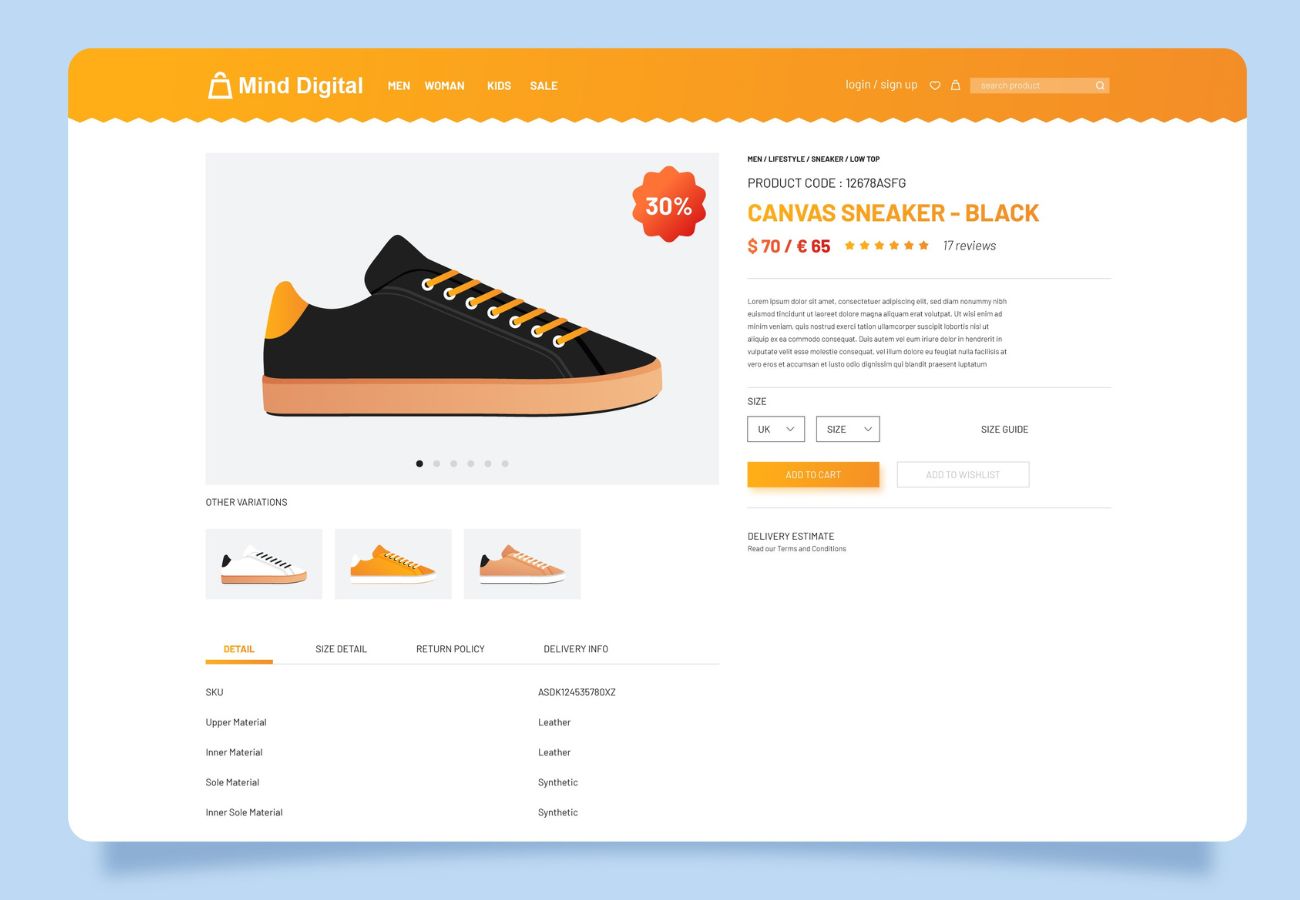
How to make Ecommerce Product pages work in an AI-first world
Nowadays, when you sell a product, you don’t just need to impress a customer, you also need to impress AI. Traditional SEO and keyword traffic are no longer enough on their own. To appear at the top of search results, your product pages must be understood, trusted and “liked” by AI systems that decide what gets surfaced, summarized, and recommended to users.Getting this right can mean the difference between being presented as the best option or disappearing into the background.
So how do you get it right? Let’s build your product pages brick by brick.
Write for people first not just Keywords
Today, AI prioritizes meaning and intent, just like your customers do. Keyword stuffing is not of much use. Your product description should answer:
- What is this product?
- Who is it for?
- What problem does it solve?
- Why is it better than anything else out there?
How to do it well:
- Use natural, conversational language like you are actually talking to a customer.
- Highlight benefits before features.
- Provide use-case-driven descriptions like if you are selling bags, picture a scenario like : “Perfect for commuters who need a lightweight, waterproof backpack.”
Make Your Content Easy to Scan for AI and Humans
People are most interested and likely to spend time on your page only if it is well-organized. Seeing a wall-of-text can be confusing and seem time taking so humans may lose interest and even AI does not like it. A well-organized page helps AI summarize your product accurately, voice assistants provide clear answers, and recommendation engines match intent. Break things up so your page is easy to read and understand by using:
- Clear headings and subheadings.
- Bullet points for features and specifications.
- Short paragraphs for easy scanning. Keep formatting consistent so everything looks clean.
Make Visuals Smarter, Not Just Prettier
AI now “reads” images and videos. High-quality visuals help both humans and AI understand your product.
Tips for visual optimization:
- Show multiple angles and lifestyle shots.
- Add clear, descriptive alt text: instead of image.jpg, try describing the image for eg:breathable running shoe with blue accents, foam sole, side view instead of shoe.jpg.
- Short videos are gold. Even silent clips that show the product in action help.
- Don’t just show your product, show it in real life by using visuals that provide context.
Build Trust Signals AI Can Recognize
AI and people both trust proof. Help both understand that your product and your brand are reliable.
Elements to include:
- Share verified customer reviews and ratings.
- Include FAQs with real questions and concise answers.
- Make return policies, shipping info, and your brand story clear and easy.
- Use structured data so AI can interpret these signals and summarize your product accurately.
Personalization Is No Longer Optional
Shoppers expect recommendations tailored to them and AI expects pages to know the customer. Your product page should know who your customer is. Personalization makes your pages feel alive, not generic.
How to personalize:
- Show related products based on what they’ve looked at.
- Remind them of recently viewed items.
- Enable AI-assisted customization: “Can I see this in green?” or “What would this look like in my living room?”
Embrace Micro-Experiences
Many shoppers never land on a full product page. They might interact with a chatbot, voice assistant or a personalized widget.
- Break your product info into digestible “answer blocks”: features, specs, reviews, tips.
- Enable instant Q&A with AI chat widgets linked to your product data.
- Offer quick-add or one-click purchase options when possible.
Many AI-driven shoppers interact with modules, not full pages. Chatbots, widgets, and voice interfaces often deliver content directly.
Optimize for Voice and Visual Search
Instead of typing, people are asking questions out loud, snapping photos and expecting instant answers.
- Use natural language in titles and descriptions.
- Include long-tail, conversational keywords.
- Add schema so AI understands price, availability, and ratings.
Be Ready for Zero-Click Purchases
AI shoppers may complete transactions without visiting your site directly. For that:
- Keep product data clean and accessible on Google, Amazon, Instagram, and other platforms.
- Enable API-based purchases for seamless transactions.
- Track conversions that happen via AI recommendations not just last-click sales.
Add Context Beyond the Product
AI recommends products based on situations how your product fits into real life, not just specs. Contextual information boosts conversions.
Ways to add context:
- “Best for” sections
- Usage scenarios and setup examples
- Comparison charts: who should choose this vs another model
- Styling tips or lifestyle applications
Focus on the Experience
Pages that are slow, clunky, or hard to navigate hurt both humans and AI’s understanding of your product.
- Speed up your pages.
- Make them mobile-friendly.
- Clear call-to-actions and simple checkout flow.
Keep Content Fresh
AI loves up-to-date info. And customers do too.
- Update stock availability and product improvements.
- Refresh FAQs and reviews.
- Add new use cases when they arise.
Optimizing product pages for both AI and humans is key to driving sales and engagement. With the right eCommerce SEO services, your products can reach the right customers at the right time, turning browsers into buyers.
Related Posts



Follow us
Recent post
Popular post
- How To Call Batch Apex By Scheduler Class Within Salesforce
- What Is The Importance Of Google Algorithm Updates
- How To Create Dynamic Dependent Picklist Of Objects Within Salesforce
- What Is Wrapper Class & How To Use It In Salesforce
- How To Create Pagination Within Salesforce
- Tips For Hiring A Good Offshore Drupal Development Company
- Web Development Mistakes That Affect Your Online Reputation
- How To Integrate Google Maps Into Your Salesforce Software
- Check Your Link Building Strategy For 2014
- Tips For Selling Products Through Social Networking
- How To Create A Chart With Salesforce
- Benefits of Using India For Outsourcing & Offshore Development
- How To Integrate Salesforce With Facebook
- What Is Service Cloud Console In Salesforce & How To Enable It
- Superior Offshore Web Development At A Reasonable Cost
- How To Create Bucket Fields In Your Salesforce Reports
- 5 Things To Consider When Hiring A Drupal Developer
- Growth Of E-commerce Website Development
- Challenges In Hiring An Offshore Web Development Company
- 10 Tips When Creating Batch Apex In Salesforce
- What To Include & What To Exclude In SEO Plans
- How To Create An Opportunity Using A Visualforce Page In Salesforce
- Hire An Offshore Ruby On Rails Development Company Over A Freelancer
- Hire Drupal Developers Offshore To Increase Your Capabilities
- Effective SEO In A Post Panda Update – The Rules Have Changed
- Common Mistakes In Offshore Web Development
- What To Consider While Hiring A Dedicated Ruby On Rails Developer?
- Smart Phone & Tablet User Penetration
- Tips For Hiring A Good Offshore PHP Development Company
- Why Responsive Web Design Is Essential For Your Business
- How To Email Documents From Salesforce
- Website Development And Website Design Company India
- Why Work With An Offshore Development Company?
- How To Create Tab Panel In Salesforce
- How To Avoid 5 Common Off-Page SEO Mistakes
- The Multi-Billion Dollar Offshore Software Development Industry
- What Are The Advantages Of Digital Marketing Over Traditional Marketing?
- SEO & Conversational Keyword Search
- How To Avoid 5 Common On-Page SEO Mistakes
- How To Add Google Authorship And Its Benefits For Better SEO
- What’s Better For Facebook Ads: CPC Or CPM?
- Questions To Ask Your Potential Search Engine Optimization Partner
- How To Create Batch Apex In Salesforce
- Benefits Of Offshore PHP Development For Your Businesses
- Offshore Magento Development Means More Than Just Development Help
- Why You Should Consider Hiring Joomla Developers Offshore
- What To Look For When Hiring A Dedicated OpenCart Developer
- Stop Using Free Web Templates – Hire A Web Development Company
- How To Manage An Offshore Development Company?
- Hire Offshore Software Professionals To Help Your Business
- Offshore Development Is A Sensible Solution For Recessionary Times
- Why You Should Offshore Your Joomla Website Development
- 5 Tips To Help You Hire A Good Offshore PHP Development Company
- Reasons Why Salesforce CRM Customization Is Easy
- PHP Development – Turn Your Website Into A Multi-Featured Web Application
- 5 Things To Ask A Web Development Company Before Starting Work
- How A Multifaceted Web Development Company Can Help You?
- Take Advantage By Hiring A PHP Development Company From India
- Use Social Media Marketing To Improve Your Brand Identity
- Hiring Dedicated Developers From Offshore Development Companies
- See Measurable Results By Hiring Dedicated Ruby On Rails Developer
- Avoid 4 Common WordPress Development Mistakes
- Can “Developed By” Links Hurt Your SEO?
- How To Get All Salesforce Components In Force.com IDE
- The Manifold Advantages Of Working With An Offshore Web Development Company
- Web Development Company In India Defined
- Hire A Dedicated Drupal Developer To Develop A High Performance CMS
- Offshore Development – The Most Beneficial And Cost Effective Way To Outsource Your Business
- What To Look For When Hiring An Offshore Development Company
- Why Dedicated PHP Web Developers Are In Demand
- How To Avoid Some Common Mistakes When Working With An Offshore Web Development Company
- How To Choose An SEO Company
- Factors To Consider When Hiring Offshore Developers In India
- What To Look For When Hiring Dedicated Magento Developers
- Why Google Create Its Own Title Instead Of Using Yours
- 3 Challenges of Working with an Offshore Web Development Company
- Why Ruby On Rails Development Has Become Popular
- Why Hire A Web Development Company That Also Offers SEO
- 10 Tips And Tricks For Salesforce
- Are Back-links Losing Their Importance To Google Search Rankings
- The Significance Of A Salesforce Developer
- 4 Reasons to Hire A Web Development Agency Over A Freelancer
- Hire A PHP Developer- How Outsourcing Can Be A Key To Success
- Importance Of Strategic Digital Marketing For Business Growth
- Factors To Keep In Mind Before Hiring Dedicated Magento Developer
- Web Development India – For Prompt And Accurate Services
- Looking For An Offshore PHP Development Company, Where Do I Begin?
- 5 SEO Myths
- How To Choose A Company When Hiring Dedicated PHP Developers
- Why You Should Optimize For Local Search
- Hiring Offshore WordPress Developers Can Help Your Business
- How To Use Social Networking To Market Your Business
- Why Offshore Web Development To India Makes Business Sense
- 5 Factors To Consider When Hiring A Web Development Company
- Top Five Benefits Of Salesforce
- Benefits Of Hiring A Dedicated PHP Developer From India
- Using SEO & Social Media Together
- How Can An SEO Company Help Your Profile Online
- Strategic Importance Of Mobile SEO
- Choose The Social Media Network That Suits Your Business
Archives
- September 2026
- August 2026
- July 2026
- June 2026
- May 2026
- April 2026
- March 2026
- February 2026
- January 2026
- December 2025
- November 2025
- October 2025
- September 2025
- August 2025
- July 2025
- June 2025
- May 2025
- April 2025
- March 2025
- February 2025
- January 2025
- December 2024
- November 2024
- October 2024
- September 2024
- July 2024
- June 2024
- May 2024
- April 2024
- March 2024
- February 2024
- September 2023
- August 2023
- July 2023
- June 2022
- May 2022
- March 2022
- January 2022
- August 2021
- July 2021
- June 2021
- May 2021
- January 2021
- December 2020
- September 2020
- August 2020
- July 2020
- June 2020
- April 2020
- March 2020
- December 2019
- November 2019
- October 2019
- September 2019
- August 2019
- July 2019
- June 2019
- May 2019
- April 2019
- March 2019
- February 2019
- January 2019
- December 2018
- November 2018
- September 2018
- April 2018
- February 2018
- January 2018
- September 2017
- August 2017
- July 2017
- June 2017
- May 2017
- April 2017
- March 2017
- February 2017
- January 2017
- December 2016
- November 2016
- October 2016
- September 2016
- August 2016
- July 2016
- June 2016
- May 2016
- April 2016
- March 2016
- February 2016
- January 2016
- December 2015
- November 2015
- October 2015
- September 2015
- August 2015
- July 2015
- June 2015